
BIM vs Traditional Drafting: How Innovation is Reshaping Construction
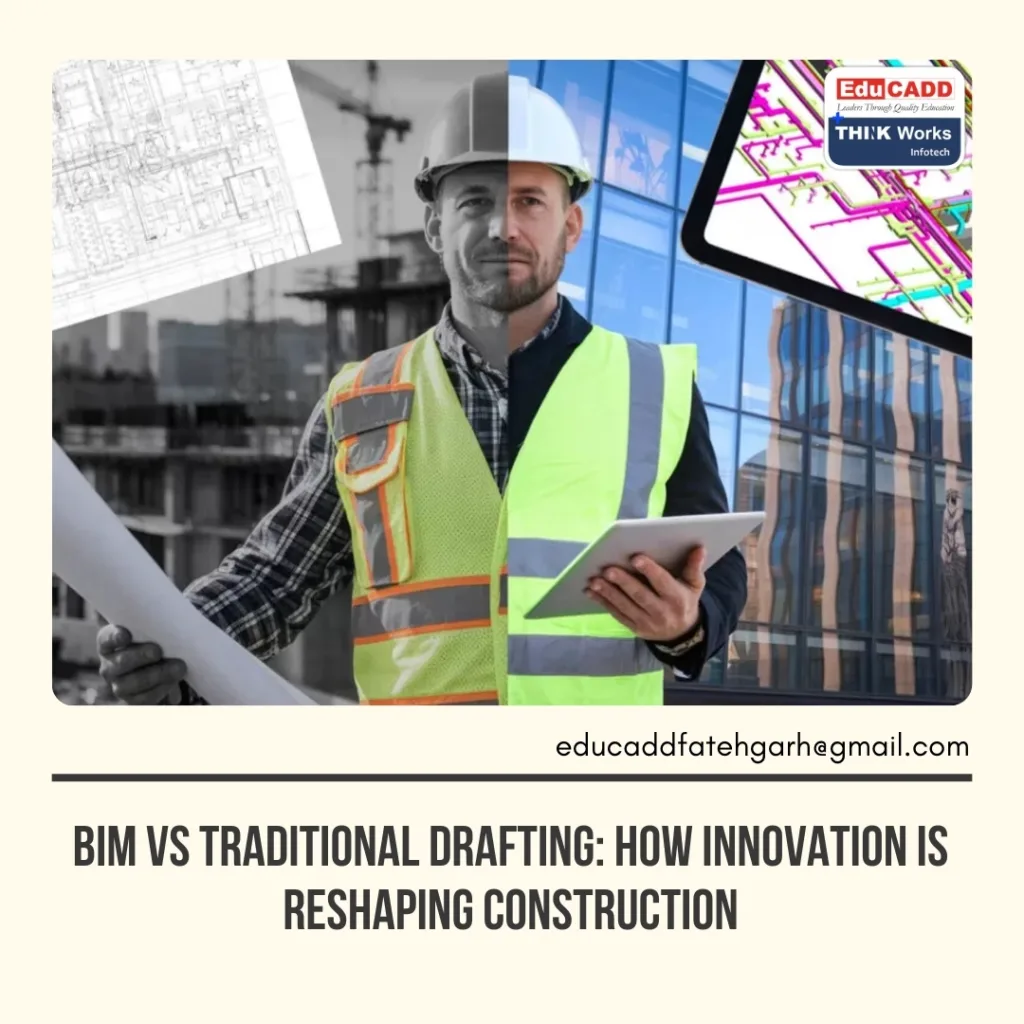
The construction industry has witnessed a dramatic transformation in recent years. One of the biggest shifts is the transition from BIM vs Traditional Drafting. While both approaches aim to create accurate designs, they differ in process, collaboration, and overall impact on projects. This evolution is not just about tools—it’s about how teams work together, how data is managed, and how construction outcomes are improved.
In this blog, we will explore the differences between BIM and traditional drafting, highlight what’s changing in the construction landscape, and uncover why BIM is rapidly becoming the industry standard.
1. Understanding the Core Difference Between BIM and Traditional Drafting
To understand the change, you first need to see what separates the two. Traditional drafting involves creating 2D technical drawings, usually with CAD software or even manual drafting tools. These drawings show dimensions, layouts, and material details. However, they are mostly static and require manual updates if changes occur.
BIM, on the other hand, is more than a visual representation. It’s a 3D, data-rich model of the project that includes precise geometry, material specifications, cost details, and timelines. Unlike traditional drafting, BIM updates all aspects of the model automatically when a change is made.
This means less room for error, better coordination between stakeholders, and a more connected design-to-build process. With traditional drafting, engineers and architects must manually cross-check drawings, but BIM eliminates that repetitive work.
2. Collaboration and Communication in the Construction Process
One of the most significant changes from traditional drafting to BIM is how project teams communicate. In the traditional process, each discipline—architectural, structural, mechanical—often works in isolation. Drawings are exchanged periodically, which can lead to mismatches, delays, and costly rework.
BIM creates a shared digital workspace where all stakeholders can work on the same model in real time. Architects, engineers, contractors, and even clients can access the same data, visualize the project in 3D, and spot potential clashes before construction begins.
For example, if a mechanical duct intersects a beam in the BIM model, the system highlights it instantly. In traditional drafting, such a conflict might only be noticed during construction, causing expensive delays.
This shift in collaboration is not just about efficiency—it’s about building trust among team members. Everyone sees the same information, reducing miscommunication and improving decision-making.
3. Accuracy, Cost, and Time Management
Accuracy in construction design is crucial. Traditional drafting relies heavily on human input, which can lead to errors in measurement or alignment. A simple miscalculation might ripple across multiple drawings, affecting project timelines and budgets.
With BIM, every component in the model is linked. If you adjust a wall’s position, the floor plan, elevation, and material list all update automatically. This automation minimizes human error and speeds up the design process.
In terms of cost, BIM allows for more precise budgeting through quantity take-offs and cost estimation directly from the model. This enables early detection of cost overruns and more accurate project planning.
When it comes to time, BIM’s clash detection and real-time updates drastically reduce rework. In traditional drafting, revisions can take days or even weeks to coordinate, whereas BIM makes them nearly instantaneous. The result is faster project delivery without compromising quality.
4. The Role of Visualization and Client Involvement
Visualization is another area where BIM outshines traditional drafting. In 2D drafting, clients often struggle to fully grasp the design. Floor plans and elevations require interpretation, which can lead to misunderstandings about the final outcome.
BIM transforms this experience with interactive 3D models that clients can explore virtually. They can “walk” through the project, see how spaces connect, and even visualize materials and lighting. This makes it easier to approve designs, suggest changes, and stay engaged throughout the process.
Moreover, BIM supports virtual reality (VR) integration, allowing clients to immerse themselves in the space before construction begins. This level of involvement ensures that expectations match reality, reducing costly last-minute changes.
Traditional drafting simply cannot match this level of engagement. The shift toward visualization not only benefits clients but also strengthens the relationship between designers and stakeholders.
5. What’s Next? The Future of BIM in Construction
The move from traditional drafting to BIM is not slowing down—it’s accelerating. Many construction companies now mandate BIM for large projects due to its proven benefits in cost control, risk management, and sustainability.
Future developments include 4D and 5D BIM, which add time and cost dimensions to the model, enabling even deeper project insights. Integration with artificial intelligence (AI) will enhance predictive analysis, allowing teams to anticipate potential problems before they occur.
Sustainability is also gaining importance. BIM supports energy analysis, material optimization, and waste reduction—all of which align with green building initiatives. Traditional drafting lacks these advanced capabilities, making BIM a more future-ready choice.
While smaller projects may still use traditional drafting for simplicity, the industry trend is clear. BIM is becoming the standard, reshaping construction from the ground up and redefining how projects are planned, designed, and delivered.
Conclusion
When comparing BIM vs Traditional Drafting, it’s evident that BIM offers significant advantages in accuracy, collaboration, cost control, and client engagement. Traditional drafting has its place, especially for simple projects, but it struggles to keep up with the demands of modern construction.
The construction industry is not just adopting new tools—it’s adopting a new mindset. BIM represents a shift toward smarter, more integrated, and more efficient project delivery. As technology evolves, this transformation will only deepen, making BIM the go-to approach for professionals who want to stay ahead.

