
Designing the Future with MCC Panels: Learn at EduCADD
In today’s fast-paced industrial world, electrical control systems play a vital role in ensuring efficiency and safety. Among them, MCC Panel Designing Course stand out as essential equipment. They manage and control motors, pumps, fans, and various machines used in industries. With rising demand in manufacturing, construction, and infrastructure, skilled professionals who can design MCC panels are highly sought after.
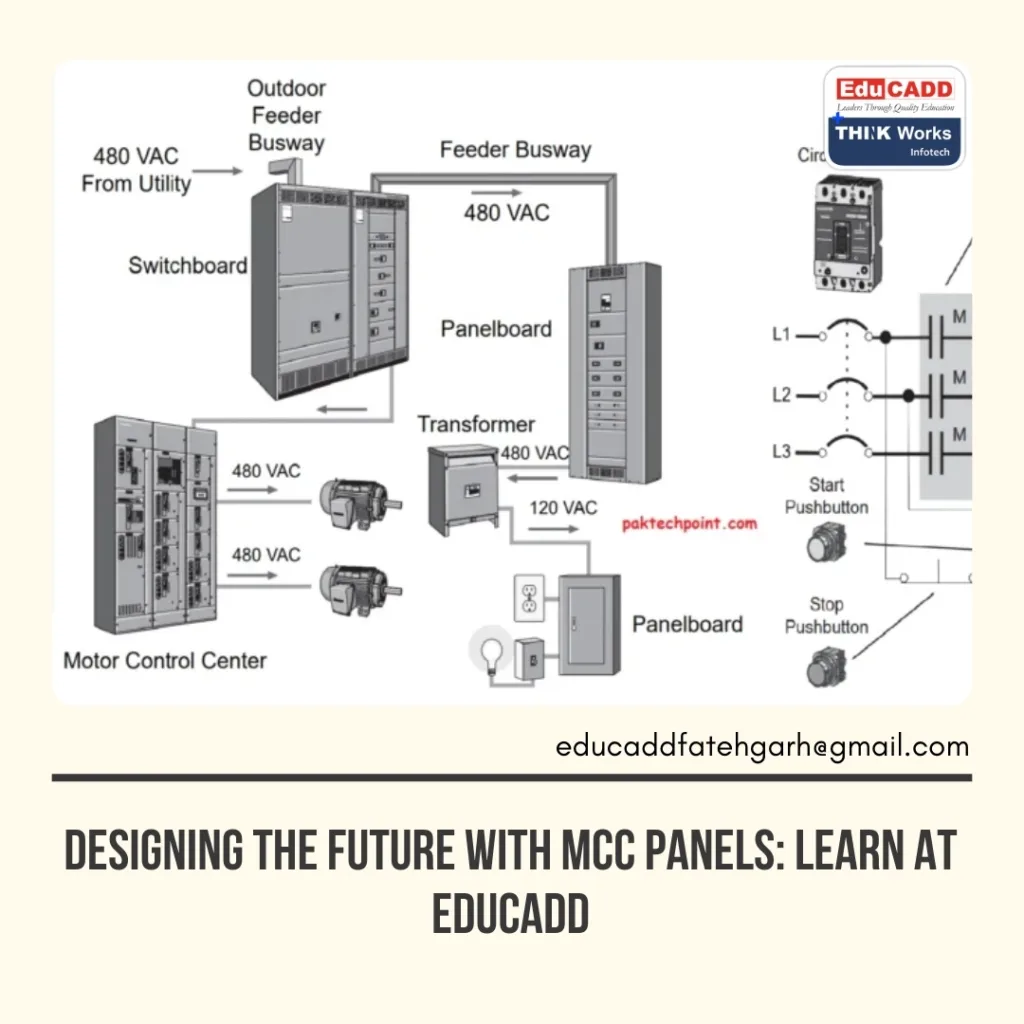
This is where EduCADD steps in. As a leading training institute, EduCADD equips learners with practical knowledge and hands-on experience in designing MCC panels. The structured courses make learners industry-ready, preparing them for excellent career opportunities. In this blog, we will explore everything about MCC panels, their importance, design process, career prospects, and how EduCADD helps aspiring engineers build a solid foundation in this field.
What Are MCC Panel Designing Course and Why They Matter
Motor Control Center panels, often called MCC panels, are critical electrical distribution systems used in industries. They house multiple motor starters in a single cabinet. Each motor is controlled through a separate section, making operations streamlined and safe.
MCC panels provide:
- Centralized control for motors
- Easy maintenance
- Improved safety standards
- Energy efficiency
- Flexibility for expansion
Without MCC panels, industries would struggle with managing motors effectively. Imagine a large factory with hundreds of machines. If every motor had an individual switchboard, maintenance would be time-consuming and risky. MCC panels solve this by integrating everything into one compact system.
Industries like oil and gas, cement, power plants, and water treatment facilities rely heavily on MCC panels. Their reliability and efficiency make them the backbone of industrial automation.
The Core Principles of MCC Panel Design
Designing MCC panels requires strong technical skills, precise planning, and adherence to safety standards. Professionals follow a systematic approach to deliver efficient and safe panels.
Key Steps in MCC Panel Design:
- Understanding Requirements – Engineers analyze the client’s needs, motor ratings, and operational conditions.
- Selection of Components – Circuit breakers, contactors, bus bars, and relays are chosen according to design load.
- Layout Planning – Internal wiring, panel size, and space allocation are finalized.
- Safety Compliance – International standards like IEC and IS guidelines are followed.
- Testing & Commissioning – Panels undergo rigorous testing before installation.
EduCADD ensures learners master each step with practical examples. Instead of just theory, students design and simulate MCC panels in real-world conditions. This makes the learning highly effective.
Career Opportunities in MCC Panel Designing
The demand for MCC panel designers is growing rapidly. Industries are expanding, and with automation rising, skilled professionals are needed more than ever.
Job Roles You Can Explore:
- Electrical Design Engineer
- Panel Design Engineer
- Control System Engineer
- Maintenance Engineer
- Project Engineer
Many graduates enter the field with basic electrical knowledge but lack practical skills. EduCADD bridges this gap by focusing on applied learning. Companies prefer candidates who can design and troubleshoot MCC panels confidently.
The average salary for entry-level engineers in MCC panel design is competitive, with rapid growth opportunities. Experienced professionals can move into project management and consultancy roles.
Why Learn MCC Panel Design at EduCADD
EduCADD stands out as a trusted institute for engineering design courses. Their MCC panel design training is carefully structured to match industry requirements.
Unique Features of EduCADD Training:
- Hands-On Projects – Students work on live projects to gain practical knowledge.
- Experienced Trainers – Faculty members have years of industrial exposure.
- Updated Curriculum – Course modules cover the latest design software and standards.
- Placement Support – EduCADD assists learners in connecting with top companies.
- Flexible Learning Options – Classroom and online learning modes are available.
Unlike generic training institutes, EduCADD emphasizes skill-building over rote learning. Learners graduate with the ability to design panels that meet safety, performance, and efficiency benchmarks.
The Future of MCC Panel Designing and Your Role in It
Technology is evolving rapidly, and MCC panel design is no exception. Industries are adopting smart panels integrated with IoT and automation. Modern MCC panels come with features like:
- Remote monitoring
- Energy consumption tracking
- Fault detection systems
- Enhanced safety features
Professionals who upgrade their skills in these areas remain in high demand. By starting your journey at EduCADD, you position yourself as a future-ready engineer. The training not only equips you with current skills but also prepares you to adapt to new innovations.
Learning to design MCC panels is not just about getting a job. It is about shaping the future of industrial operations. Skilled designers contribute to efficiency, sustainability, and technological growth.
Conclusion
MCC Panel Designing Course is a specialized skill that opens doors to multiple career opportunities. With industries relying heavily on automation and control systems, the demand for experts in this field continues to grow. EduCADD provides the perfect platform to learn, practice, and excel in MCC panel design.
By enrolling in their program, you gain practical exposure, industry knowledge, and career guidance. If you want to secure a future in electrical engineering, Designing MCC Panels – Start Learning at EduCADD is the right path for you.

