
Mastering PLC Panel Design & Wiring Layouts: A Complete Learning Guide
In today’s industrial world, automation is the backbone of efficiency. At the heart of that automation lies the PLC panel—a hub of control, safety, and precision. Whether you are an aspiring electrical engineer or a working technician, learning PLC Panel Design Guide is a valuable skill. This expertise opens doors to industries such as manufacturing, process control, and automation systems integration.
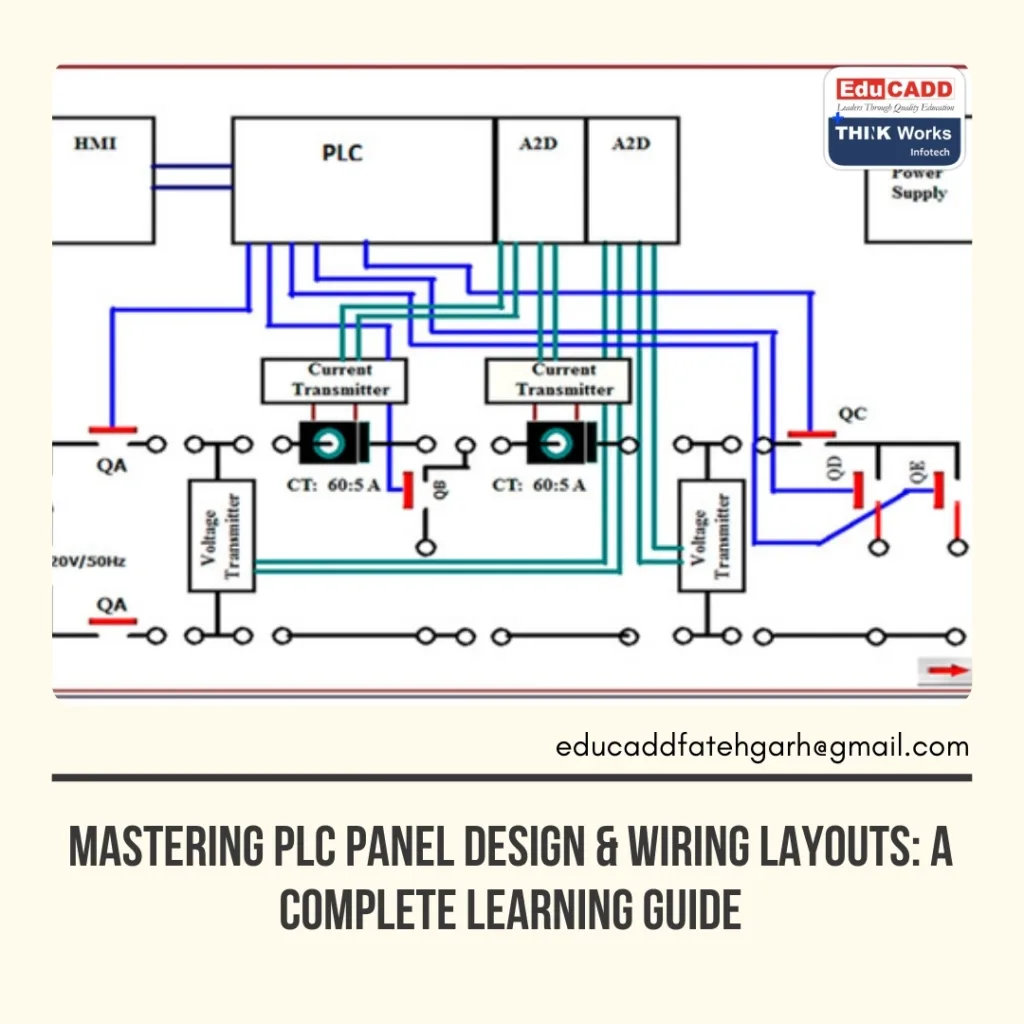
When you PLC Panel Design Guide, you not only gain technical knowledge but also develop the ability to troubleshoot, optimize, and innovate. This guide will walk you through the concepts, techniques, and best practices. It will help you master panel design from planning to execution while ensuring your work meets industry standards.
1. Understanding the Basics of PLC Panels
A Programmable Logic Controller (PLC) is an industrial computer designed to automate electromechanical processes. The PLC panel is the enclosure housing all components required for PLC operation, including power supplies, input/output modules, relays, and communication devices.
When learning PLC panel design and wiring layouts, it’s essential to start with the fundamentals:
- Panel Layout – The physical arrangement of devices for easy maintenance and operation.
- Component Selection – Choosing the right PLC, breakers, fuses, contactors, and terminal blocks.
- Safety Measures – Incorporating emergency stops, grounding systems, and insulation protection.
A well-designed panel ensures reliability, reduces downtime, and simplifies troubleshooting. Beginners often overlook clear labelling and cable routing, but these small details can save hours of repair time.
2. Step-by-Step Process for PLC Panel Design
Designing a PLC panel requires more than just connecting wires. It involves planning, organizing, and adhering to industry codes. Here’s a step-by-step breakdown:
Step 1: Understand the System Requirements
Before starting the design, gather complete details about the automation process. Identify the number of I/O points, power requirements, and environmental conditions.
Step 2: Select the Right Components
Choose a PLC model compatible with your application. Select input devices like sensors and pushbuttons, and output devices such as motors and actuators.
Step 3: Create a Schematic Diagram
This is the blueprint of your system. It shows how each component is connected. A clear schematic makes the wiring process straightforward.
Step 4: Determine Panel Dimensions
Your panel should have enough space for components and future expansion. Avoid overcrowding to ensure airflow and cooling.
Step 5: Plan for Safety and Compliance
Follow standards such as IEC or NEC for electrical panel design. Incorporate lockout/tagout provisions to ensure safe maintenance.
By following these steps, you can design a panel that is not only functional but also future-proof.
3. Wiring Layouts: Best Practices and Techniques
Wiring is the backbone of any PLC panel. A poorly executed wiring layout can cause faults, delays, or even equipment damage. To excel when you learn PLC panel design and wiring layouts, follow these best practices:
- Use Color-Coded Wires – Assign colors to different voltage levels and signals for quick identification.
- Label Everything – From terminal blocks to cables, clear labelling reduces confusion during maintenance.
- Separate Power and Signal Lines – This prevents electromagnetic interference (EMI) and improves reliability.
- Follow a Logical Routing Path – Keep wires neat, bundled, and away from moving parts.
- Provide Slack – Allow extra length for easy replacement or adjustment of components.
Also, consider using cable ducts and ferrules to protect wires. Every detail in wiring affects both performance and safety, so take time to do it right.
4. Tools, Software, and Resources for Learning
Learning PLC panel design and wiring layouts becomes easier with the right tools and training resources. Modern engineers rely on a mix of hardware tools and software to speed up the process.
Essential Tools for Panel Design
- Screwdrivers, crimping tools, and wire strippers
- Multimeters and insulation testers
- Cable ties, ferrules, and heat-shrink tubing
Popular Software for Design
- AutoCAD Electrical – Ideal for creating detailed schematics.
- EPLAN Electric P8 – Specially designed for panel wiring layouts.
- SolidWorks Electrical – Integrates 3D modeling with electrical design.
Learning Resources
- Online Courses – Platforms like Udemy and Coursera offer PLC wiring tutorials.
- Technical Books – “Programmable Logic Controllers: Principles and Applications” is a great start.
- Workshops and Internships – Hands-on experience is the fastest way to master the skill.
Investing time in both theoretical learning and practical application will accelerate your expertise.
5. Career Benefits and Future Scope
Industries worldwide are moving towards automation. Skilled professionals who learn PLC panel design and wiring layouts are in high demand. This skill can lead to roles such as:
- Automation Engineer
- Electrical Design Engineer
- PLC Programmer
- Maintenance Supervisor
With experience, you can work on large-scale industrial automation projects or even start your own panel design business. The ability to integrate PLCs with IoT systems is becoming a valuable addition to this skill set.
The future will bring smarter factories and more interconnected systems. Professionals who adapt to new technologies while mastering the fundamentals of panel design will stay ahead in the job market.
Conclusion: Building Your Path to Mastery
Learning PLC Panel Design Guide is more than just understanding circuits. It’s about creating efficient, safe, and reliable control systems that drive industrial automation forward. By following best practices, using the right tools, and constantly updating your knowledge, you can position yourself as a sought-after professional in the field.
Your journey starts with mastering the basics, practicing with real-world projects, and staying curious about emerging technologies. Every well-designed panel you create will be a testament to your skill, precision, and dedication.

